


Automatic Rice Cooker

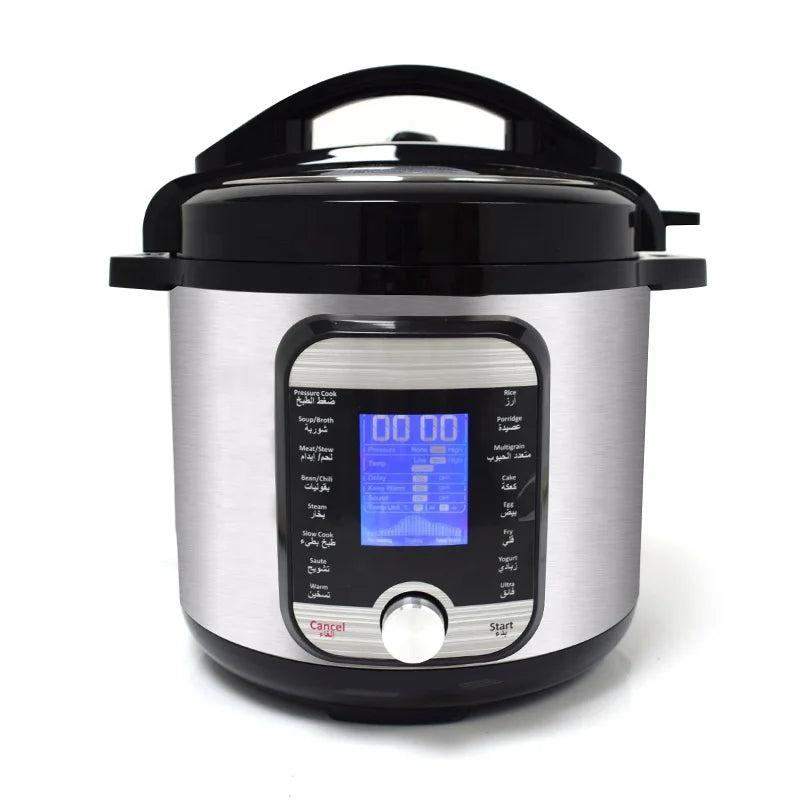
<3.8L Multifunctional Electric stew pot Slow Cooker Ceramic Inner Pot M>
The Group-Rice
Playbook: How to Choose and Use a Commercial Electric Rice Cooker
When rice is part of the main service, the right cooker can
make group meals easier to plan, portion, and serve. Hotels, restaurants,
caterers, event hosts, and practical home cooks all need the same basics:
enough capacity, a repeatable workflow, and equipment that fits the way they
work.
This guide covers how to match capacity to your group, plan
portions, prepare and serve efficiently, and evaluate a commercial cooker
before buying.
1. Choose Capacity
Around Your Real Service
Capacity should follow your busiest realistic service, not
just the number of people you hope to serve. Start with the expected headcount,
then consider whether rice is a side dish, a bowl base, a buffet staple, or the
foundation of a larger menu.
MediaEclat.store describes its commercial super-large
electric rice cooker in an 8L–36L range for approximately 6–70 people. Treat
that range as a planning reference, then confirm the appropriate size against
your own portions, menu mix, available workspace, and service pattern.
|
Operating situation |
Capacity decision cue |
What to verify |
|
Small group meals or lower-volume service |
Look toward the smaller end of the 8L–36L range. |
Counter space, storage, and your normal serving size. |
|
Regular group service |
Choose a middle capacity that suits your typical
headcount. |
Whether one batch covers service or a refill plan is
needed. |
|
Buffets, catering, or large gatherings |
Consider the larger end of the range when demand is
concentrated. |
Electrical requirements, transport, loading access, and
serving workflow. |
Practical rule: Avoid sizing only for an average day. If under-capacity
creates a rushed refill during peak service, the inconvenience may outweigh the
benefit of a smaller footprint.
2. Plan Portions
Before You Plan Production
A headcount is only the starting point. Portion planning
should reflect who is eating, how rice is served, and what else is on the menu.
A hotel breakfast buffet, a plated restaurant meal, a catering tray, and a
family-style gathering can all need different amounts for the same number of
people.
Build a simple portion standard for your operation and
record it after each service. Track how much was prepared, how much was served,
and what remained. Over time, this gives you a more useful guide than a generic
serving estimate.
|
Operator rule: Plan for your busiest likely demand, but do not
automatically fill the cooker to its maximum. Your menu, vessel markings, and
operating instructions should guide the actual batch. |
Before selecting a capacity, answer these questions:
·
Who is eating? Separate
regular portions, larger appetites, children, staff meals, and second servings
where relevant.
·
How is rice served? A
self-serve buffet, plated meal, takeaway container, and shared bowl encourage
different portion habits.
·
What accompanies it? Curries,
proteins, vegetables, noodles, bread, and other starches can change how much
rice guests choose.
·
When is demand highest? Plan
around the busiest meal period, not a quiet service with fewer guests.
·
What is your refill strategy?
Decide whether the operation needs one planned batch, a reserve batch, or a
second cooker for separate services.
3. Build a
Repeatable Preparation and Serving Routine
A commercial rice cooker is most useful when it supports a
consistent routine. Standardize the steps that happen before the cooker is
switched on, during the handoff to service, and after the meal is finished.
1.
Measure consistently. Use the
same rice measure, water method, and batch notes each time. Consistency makes
adjustments easier when the rice variety or menu changes.
2.
Prepare the cooking vessel.
Check that the inner pot is clean, correctly seated, and free from residue that
could affect the next batch.
3.
Follow the operating instructions. Use the cooker’s own markings and guidance rather than
assuming every rice variety needs the same treatment.
4.
Protect the serving flow. Position
the cooker where staff can portion safely without blocking guest movement, prep
space, or other equipment.
5.
Use a dedicated serving utensil.
Keep portioning steady and avoid scratching the inner pot with unsuitable
tools.
6.
Record what happened. Note the
rice type, batch size, guest count, leftovers, and any adjustments for the next
service.
Serving checklist
Confirm the cooker is placed on a
stable, suitable surface.
Keep the lid and serving area
managed to reduce unnecessary handling.
Use your food-safety procedures
for holding, portioning, labeling, and leftovers.
Clean and dry removable parts
according to the product instructions before storage.
4. Know What to
Check Before Buying
Capacity is important, but it is not the only buying
decision. A cooker that fits the menu but not the workspace, electrical setup,
or cleaning routine can create avoidable problems for a busy operator.
|
Buying question |
Why it matters |
|
Which capacity fits my normal and peak service? |
It connects the 8L–36L range to actual guest demand
instead of guesswork. |
|
What electrical setup does the model require? |
The cooker must suit the outlet, location, and operating
environment where it will be used. |
|
How much space does it need? |
Measure the counter, clearance, storage, transport route,
and serving position before ordering. |
|
What parts need regular cleaning? |
Simple access to the inner pot, lid, and surrounding
surfaces supports a practical cleaning routine. |
|
What information comes with the product? |
Look for clear operating guidance, capacity details, care
instructions, and seller support before committing. |
|
Does it match my service format? |
A buffet, catering setup, restaurant line, and home event
may need different placement and handling choices. |
For food-service operators, also involve the people who will
use and clean the cooker. Their feedback can reveal whether the size, controls,
lifting points, lid design, and storage plan are workable in daily service.
Conclusion: Match
the Cooker to the Workflow
The best commercial electric rice cooker is the one that
matches your real group size, portion standard, workspace, and service routine.
Start with demand, choose capacity deliberately, standardize preparation, and
check the practical details before buying.
If you are comparing options for a hotel, restaurant, catering operation, event, or large home gathering, explore the 8L–36L commercial super-large electric rice cooker range at MediaEclat.store. Use your headcount and workflow checklist to identify the capacity that best fits your next service.
- 8L–36L capacity options
- Serving sizes for 6–70 people
- A professional hotel and catering kitchen setting
- The call to action: “Shop now at mediaeclat.store”


Comments