


Sudoku builds what, in terms of human potential?
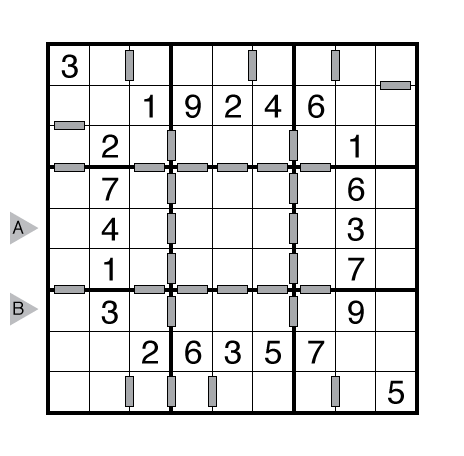
How Sudoku Builds Human Potential: Strengthening the Mind One Puzzle at a Time
Meta Description: Discover how Sudoku builds human potential by improving memory, logical reasoning, executive function, focus, and cognitive resilience. Learn why this timeless puzzle is a powerful tool for lifelong brain health.
SEO Keywords: Sudoku benefits, human potential, brain training, cognitive reserve, executive function, logical reasoning, working memory, mental agility, healthy aging, problem-solving skills, brain health, cognitive resilience
How Sudoku Builds Human Potential: Strengthening the Mind One Puzzle at a Time
Sudoku is much more than a pastime—it is a structured mental exercise that develops specific cognitive abilities while encouraging discipline, patience, and thoughtful decision-making. Unlike games that rely on chance, Sudoku is solved entirely through logic and deduction, making it an excellent tool for exercising the brain.
As people seek practical ways to remain mentally sharp throughout life, Sudoku offers an accessible, inexpensive, and enjoyable activity that can contribute to lifelong learning and healthy cognitive aging.
Cognitive Skills Sudoku Builds
Working Memory and Sustained Attention
Every Sudoku puzzle requires players to hold multiple possibilities in mind while scanning rows, columns, and 3×3 boxes. This continuous mental juggling strengthens working memory—the ability to temporarily store and manipulate information—which is essential for learning, planning, and everyday decision-making.
At the same time, Sudoku trains sustained attention by encouraging players to maintain concentration while filtering out distractions.
Logical Reasoning and Pattern Recognition
Unlike trivia or memorization games, Sudoku depends entirely upon deductive reasoning.
Players learn to:
Recognize numerical relationships
Eliminate impossible choices
Identify hidden patterns
Draw logical conclusions from available evidence
These reasoning skills mirror the analytical thinking used in science, engineering, finance, programming, business management, and strategic planning.
Executive Function
Sudoku actively engages executive functions—higher-level mental processes responsible for:
Planning
Organization
Decision-making
Self-monitoring
Cognitive flexibility
Error detection
These abilities help people organize their daily lives, solve complex problems, and make better decisions under pressure.
Problem-Solving Agility
As puzzles become more difficult, players naturally develop increasingly sophisticated strategies. Instead of relying on trial and error, experienced Sudoku enthusiasts recognize recurring logical structures and solve problems more efficiently.
This repeated practice strengthens analytical thinking and adaptability.
Beyond the Puzzle: Human Potential
Improved Patience and Perseverance
Sudoku teaches an often-overlooked life skill: progress through persistence.
Difficult puzzles cannot be rushed. Success comes from:
Careful observation
Methodical thinking
Willingness to reconsider assumptions
Learning from mistakes
These habits translate into resilience when facing challenges at work, school, or in personal life.
Emotional Regulation
Many people discover that Sudoku provides a calming mental focus.
Instead of dwelling on daily stressors, attention becomes centered on solving one logical step at a time. This focused engagement can:
Reduce stress
Encourage mindfulness
Increase confidence after solving difficult puzzles
Improve tolerance for frustration
Cognitive Reserve and Healthy Aging
One of the most promising concepts in brain health is cognitive reserve.
Researchers believe that years of engaging in intellectually stimulating activities may help the brain develop alternative pathways that make it more resilient to age-related cognitive decline.
Sudoku is one of many mentally challenging activities—including reading, learning new skills, playing musical instruments, and studying languages—that may contribute to building this reserve.
Studies have associated regular puzzle participation with slower cognitive decline in older adults, although Sudoku should be viewed as one part of a broader brain-health lifestyle rather than a standalone solution.
Transfer of Skills: What the Research Says
Research distinguishes between two kinds of learning transfer.
Near Transfer
Sudoku clearly improves performance on tasks involving:
Logical reasoning
Pattern recognition
Concentration
Working memory
Similar analytical challenges
Far Transfer
Current evidence is less conclusive regarding whether Sudoku substantially increases general intelligence (IQ), verbal memory, or unrelated academic abilities.
Rather than making someone universally "smarter," Sudoku appears to strengthen the core cognitive processes that support effective thinking across many areas of life.
A Balanced Perspective
While Sudoku offers many benefits, it also has limitations.
It should not replace regular physical exercise, which is also essential for brain health.
It is most effective when combined with lifelong learning, social interaction, quality sleep, healthy nutrition, and stress management.
No single brain game has been proven to prevent dementia by itself.
Consistency matters more than puzzle difficulty. Regular engagement over time appears to provide the greatest cognitive benefit.
Building Human Potential
Human potential is not merely about intelligence—it is about cultivating habits of thought that enable better decisions, stronger resilience, and lifelong growth.
Sudoku develops many of these habits by strengthening:
Working memory
Logical reasoning
Pattern recognition
Executive function
Strategic planning
Patience
Emotional regulation
Cognitive resilience
These are measurable cognitive abilities that support success in education, leadership, business, technology, and everyday life.
Final Thoughts
Sudoku demonstrates that remarkable personal growth often begins with simple daily habits. A single puzzle solved each day may not transform intelligence overnight, but over months and years it can help cultivate sharper thinking, greater focus, and disciplined reasoning.
In a world increasingly filled with distractions, the ability to think carefully, reason logically, and remain mentally resilient is itself a powerful expression of human potential.
Hashtags
#Sudoku #BrainHealth #HumanPotential #MentalFitness #HealthyAging #CognitiveHealth #ExecutiveFunction #ProblemSolving #CriticalThinking #WorkingMemory #Focus #Mindfulness #BrainTraining #LifelongLearning #Neuroplasticity #Memory #MentalAgility #Wellness #PersonalDevelopment #MediaEclat

%20(2)%20(1).png)


%20(2).png)


Comments